 Michael Torres
Key Takeaways
- The head — firebox, burners, gas train, ignition — is the grill; the cart or island around it is structure and should be judged separately.
- Replacing a built-in head costs more than the grill, because the island cutout, gas line and electrical supply were built around the old dimensions.
- Ignition, burners, radiants and grates are ordinary repairs on either format, starting from $150.
- Firebox corrosion is the failure that changes the answer: the site flags RUST-THRU as a stop-using condition, from $250.
- A rusty cart under a sound head is a cosmetic problem, not a reason to buy another grill.
The Bottom Line
Repair the head and judge the surround on its own. On a built-in, a sound firebox is worth repairing well past the point a cart model would be retired, because replacement means island work as well as a new grill.
Two owners can have the same burner fail on the same grill head and face completely different decisions, because one grill is bolted into a masonry island and the other rolls on a cart. A DCS built-in grill repair is almost always worth doing on a head that is otherwise sound, while the same money spent on a cart model gets weighed against simply buying another grill. Knowing which situation you are in before you call saves the argument.
| Built-in head | Cart model | |
|---|---|---|
| Access to the gas train | From the front, island stays put | Full access from all sides |
| What a replacement costs you | Grill plus island rework | Grill only |
| Where corrosion starts | Firebox floor, island cavity | Cart frame, casters, side shelves |
| Parts most often replaced | Burners, igniters, radiants, grates | The same, plus cart hardware |
| Typical repair | from $150 | from $150 |
| Structural failure | from $250, worth a hard look | Usually the point to replace |
The Head Is the Grill, the Cart Is Furniture
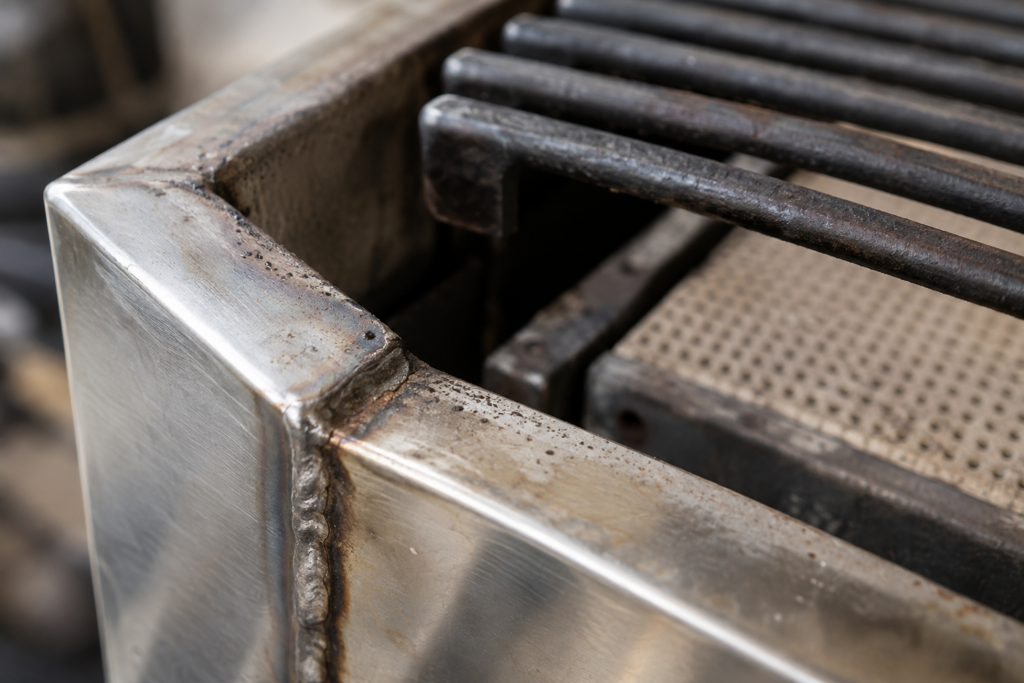
On both versions the expensive engineering lives in the same place: the firebox, the burners, the gas train, the ignition, and the cooking surface. That assembly is what a technician works on, and it is identical in kind whether it sits in a stone island or on a stainless cart. Everything else — wheels, doors, side shelves, the cabinet under the head — is structure.
This is the first thing to establish, because owners of cart models often describe a rusty cart and a sagging door as "the grill is finished" when the head is in fine shape. The reverse happens with built-ins: people assume a firebox problem means tearing the island apart, when most service on a built-in is done by sliding the head forward or opening the front panel with the island untouched.
What Actually Breaks on Either One
The failure list is short and repeats across both formats. Ignition goes first, because igniters live directly under grease and heat. Burners follow: ports clog, then the burner tube itself thins from the inside. Radiants and grates are consumables on any grill used year-round.
- Ignition. The site records a grill that will not light as NO-IGN, with repair from $150. Electrodes, wiring, and the module are all serviceable parts.
- Burners and ports. Uneven heat across the surface, listed on the site as HOT-SPOT, uneven heat zones, usually starts with blocked ports rather than a dead burner.
- Radiants and grates. Cheap, expected to be replaced periodically, and the single most common reason a grill "cooks badly" without anything being broken.
- Valves and the gas train. Stiff knobs and weak flame at one position are repairs, not reasons to replace a grill.
- Firebox corrosion. The site lists this as RUST-THRU, firebox corrosion, from $250, and flags it as a stop-using condition — this is the one failure that changes the decision.
The Built-In Math
Replacing a built-in head is never just the price of a grill. The cutout in the island was made for a specific width and depth, the gas line and any electrical supply terminate where they terminate, and a head that does not match those dimensions means masonry or cabinetry work on top of the purchase. That is why a built-in head with a sound firebox is worth repairing well past the point where a cart model would be retired.
It also changes how you should treat maintenance. A built-in sits in an enclosed cavity where grease, moisture, and debris collect and stay, and where you rarely look. Owners who keep the cavity clean and the drip tray emptied get far more years out of the same head. Corrosion in a built-in is not usually a surprise — it is two or three seasons of an unseen wet firebox floor.
The Cart Math
A cart model is easier to service and easier to walk away from. Access is unrestricted, so labor is simpler, and nothing is attached to the property. The trade is that the cart itself is exposed hardware: casters seize, side shelf hinges corrode, and cabinet doors stop closing square. None of that affects cooking, and none of it should be confused with the head failing.
Decide on the cart and the head separately. A tired cart under a good head is a cosmetic problem, and some owners solve it by moving the head into a small island instead of replacing anything. A good cart under a firebox with corrosion is the opposite case, and no amount of cart condition makes a rusted-through firebox safe to run.
Where the Line Falls on Either Format
The decision comes down to three questions, in this order. Is the firebox structurally sound? Is the gas train intact? Is what failed a consumable, a component, or the structure? Consumables and components are repairs on both formats. Structure is where the formats part ways: on a cart it usually means a new grill, and on a built-in it is worth a technician's opinion before anyone starts pricing islands.
- Look at the firebox floor with the grates and radiants out, in daylight. Perforation, not discoloration, is what matters.
- Count the recent repairs. Three separate component failures in a season on an older grill says something the individual parts do not.
- Price the surround, not just the grill, if you are built-in and leaning toward replacement.
- Separate cart condition from grill condition before you decide anything.
Our guide on whether to repair or replace a DCS grill covers the age and cost side of the same question in more detail.
Getting an Answer You Can Act On
A diagnostic starts from $89 and gives you the one thing this decision actually needs: whether the firebox and gas train are sound. Everything else follows from that answer. Our DCS grill repair service handles both formats, and a technician will tell you plainly when a grill is not worth the parts.
The final price is confirmed after the on-site diagnosis, and you get a written estimate before any work starts. Book a visit and mention which format you have — built-in or cart — because it changes what comes on the truck.