 Michael Torres
Key Takeaways
- Continuous sparking on a DCS cooktop is usually moisture in a knob switch or on an igniter electrode.
- Do not use the cooktop while it sparks, and switch off the circuit breaker to stop it at once.
- Dry the cooktop for at least 8 hours, preferably 24, and clean the electrode tips before restoring power.
- Sparking that returns straight after a full dry-out points to a failed switch or control board, which is usually a repair.
- Several faults at once, or a burning smell and scorch marks, mean weighing the whole cooktop.
The Bottom Line
Switch off the breaker, dry the cooktop fully and clean the electrodes. If the clicking returns, a switch or board is the likely cause and repair, from $150, is usually the sensible route.
A DCS gas cooktop that clicks away with every knob turned off is alarming the first time, and the next worry is the bill. Continuous sparking means the ignition system is running outside its normal control, and the site's own page for the CPU-366 and CPU-486 cooktops is blunt about what to do while it lasts: do not use the cooktop until it stops. The decision between repair and replacement is less dramatic than the noise suggests. Very often the cause is moisture, which clears with time and a dry cloth, and the cases that are not moisture point at two specific parts.
| What happened | Likely cause | Repair or replace? |
|---|---|---|
| Clicking began right after a boilover | Liquid in a knob switch or on an electrode | Repair; usually dries out with no part |
| Clicking stops after drying and cleaning | Moisture was the whole problem | Neither; keep the cooktop |
| Clicking returns straight after a full dry-out | A failed ignition switch or control board | Repair on a cooktop in good condition |
| Burning smell or scorch marks near an electrode | Damage beyond moisture | Get it assessed; weigh replacement |
What Causes Continuous Sparking on a DCS Cooktop?
Three things, and the first two are about water. The continuous sparking page lists them in order of likelihood. In the first, liquid from a spill or heavy condensation has entered a burner knob switch and is bridging the ignition contacts, so the module keeps running. In the second, a wet or dirty igniter electrode arcs to the nearest grounded surface because the moisture gives it a path, even when no spark has been commanded. The third is a failed ignition switch, or a control board with a stuck output driver, which keeps the module energized whatever the knobs say.
The page also describes what you will see. Constant rapid clicking with every knob off is the defining sign, and clicking that carries on after a burner has lit is the other. If it began just after a boilover, moisture is the first suspect.
Is It Safe to Use a Cooktop That Keeps Sparking?
No. The page says sustained sparking near gas components or liquid spills creates a fire risk, and that the cooktop should not be left unattended while it is sparking, because continuous ignition module activity can overheat the module. Turning off the circuit breaker stops the sparking at once, which is the right first move.
Stop and get help straight away if you notice a burning smell or visible scorch marks near an igniter electrode. Those go past a damp switch. If you smell gas at any time, leave the area and call your gas utility from outside.
DCS Cooktop Continuous Sparking Fix or Replace: The Dry-Out Test
A thorough dry-out is both the cheapest fix and the best test, because it separates a damp cooktop from a faulty part. Rushing it is what sends owners to the wrong answer, since the clicking often returns if power is restored too soon.
- Switch off the circuit breaker for the cooktop right away.
- Remove the grates and burner caps and absorb any visible liquid with a clean cloth.
- Leave it to air-dry for at least 8 hours, and preferably 24, before restoring power.
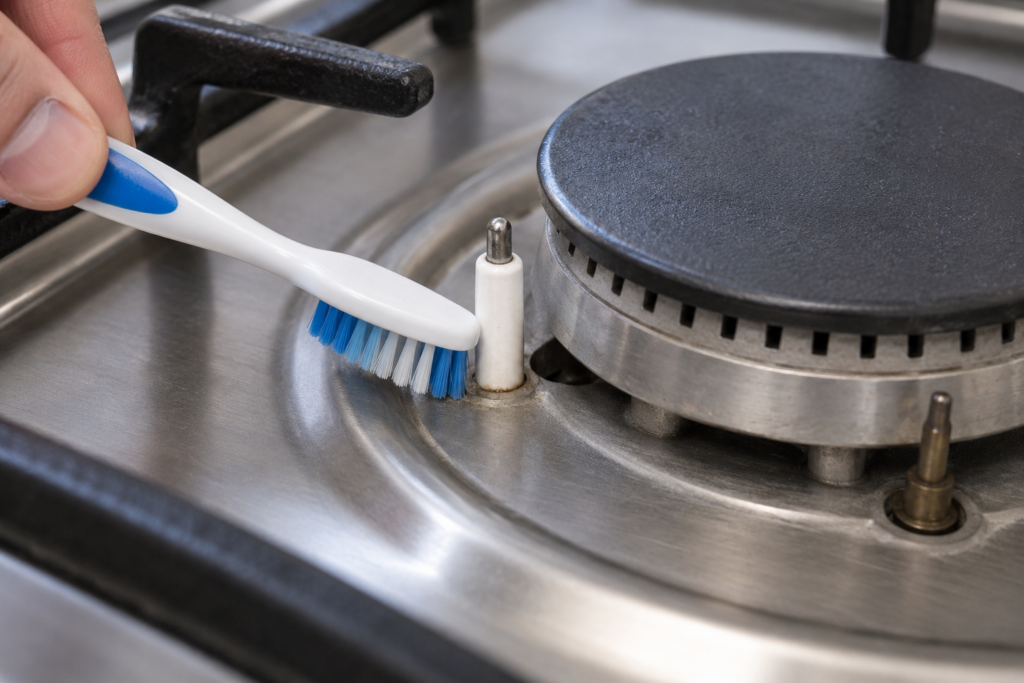
- Clean each igniter electrode tip and the ceramic body with a dry toothbrush, paying attention to the base where liquid pools.
- Restore power and watch. If the clicking stops within five seconds, the moisture was the problem.
If the clicking starts again immediately, switch off and book service. The page says continuous sparking that persists for more than five seconds after power is restored following a full dry-out is a reason to stop.
When Is a DCS Cooktop Worth Repairing for Sparking?
When the cause is a switch or a board and the cooktop is otherwise sound, the repair makes sense. A repair of this kind starts from $150 according to the code page, with a 30 to 60 minute visit, and the final price is confirmed after diagnosis on site, with a written estimate before work begins. It is the kind of fault where a single failed part is replaced and the cooktop carries on.
The page names three situations that need a technician: sparking that persists after 24 hours of drying and cleaning, a burner knob switch that is physically damaged or stuck, and a control board diagnostic that confirms a stuck ignition output driver. In each, the question to ask the technician is whether the fault is confined to one part, because that is what makes the repair the sensible choice.
When Replacement Starts to Make Sense
When sparking is one of several faults, or the cooktop shows signs of repeated moisture damage. A control board that has failed on an older cooktop, together with corroded parts or burners that also misbehave, tips the sum toward a new unit. The decision is the same one our DCS rangetop repair or replace guide sets out for the wider appliance, and the cooktop as a whole is covered in is it worth repairing a DCS cooktop.
- One failed switch or board, cooktop in good condition: repair.
- Moisture only, clears after drying: no repair at all.
- Burning smell or scorch marks near an electrode: have it assessed before deciding.
- Several unrelated faults in a short time: weigh the whole cooktop.
Preventing a Repeat
Whether the cause was a spill or a part, the aim afterward is to keep liquid away from the ignition system, because moisture was the first suspect on the code page. The habits are ordinary, and they cost nothing.
- Deal with boilovers quickly once the cooktop is cool, before liquid has time to run toward the switches.
- Switch the breaker off if liquid has reached the ignition area, instead of waiting to see if the clicking starts.
- Keep burner caps seated after cleaning so spills run onto the surface and not into the burner.
- Dry everything fully before restoring power, since rushing the dry-out is what makes the clicking come back.
If the cooktop has already sparked once, treat the next spill with extra care. A switch that has been wet before is more likely to misbehave again, and noting how often it happens gives a technician something concrete to test.
Before You Book
Tell the technician when the sparking started, whether a spill came first, how long you let the cooktop dry, and whether the clicking returned. That history lets them go straight to a switch or the board. If burners also fail to light, our guide to a DCS cooktop burner not lighting is the next one to read. Our cooktop repair service covers ignition modules and switches. When you are ready, book a visit or send us the cooktop model and a description of the clicking.