 Michael Torres
Key Takeaways
- A yellow or orange flame means incomplete combustion, and that gives off elevated carbon monoxide, so ventilate and stop using the burner.
- The three causes are a blocked air intake, clogged burner ports and a gas type that does not match the range.
- Cleaning ports and air intake slots with the burner cold clears the first two causes.
- A gas type mismatch burns yellow on every burner and needs an orifice change, which only a technician should do.
- If a carbon monoxide detector alarms, leave the house and call the fire department.
The Bottom Line
Ventilate, clean every burner cold and check the gas rating label. If the flame is still yellow, stop using it and book a diagnosis.
A blue flame with a crisp inner cone is what a gas burner is supposed to look like, and when a DCS burner starts showing yellow or orange tips, the burner is telling you it is not getting enough air for the gas it is burning. The change is easy to miss in a bright kitchen and easy to dismiss as a cosmetic quirk, but it means combustion is incomplete, and incomplete combustion makes soot and carbon monoxide. This guide explains what is behind a yellow flame on a DCS range, which causes you can clear yourself, and the one cause that cleaning will never fix.
| What the flame looks like | Likely cause | First step |
|---|---|---|
| Yellow tips on one burner, the others blue | Clogged ports or a blocked air intake at that burner | Clean it, cold, and reseat the cap |
| Uneven ring, part blue and part yellow | Ports clogged unevenly, so some run rich | Clean every port on the cap |
| Yellow on every burner at once | Gas type does not match the range | Check the rating label, then call a technician |
| Soot on pans or a faint smell of gas | Incomplete combustion | Ventilate, stop using the burner and clean it |
What Causes a DCS Gas Range Yellow Flame?
Too little air for the amount of gas, and there are three ways that happens. This site's code pages for DCS cooktops and rangetops list the same three causes for the yellow flame fault, and the burner physics is the same on any gas range top, so they are the place to start on a range too.
- Blocked air intake or air shutter — grease or debris has partly closed the opening near the burner base, so the gas-to-air mixture runs rich and burns yellow.
- Clogged burner ports — boilovers and cleaning residue block some ports, so parts of the ring run rich while others run lean, giving a mixed blue and yellow pattern.
- Wrong gas type or pressure setting — the appliance is set up for natural gas and is connected to propane, or the other way round, which gives the wrong air-to-gas ratio from the first light.
The first two are maintenance problems and come on gradually. The third is a setup problem and is present from the first time the burner is lit after a change.
Is a Yellow Flame on a DCS Range Dangerous?
Yes, because a yellow flame means incomplete combustion, and incomplete combustion gives off elevated levels of carbon monoxide. Ventilate straight away by turning on the range hood or opening a window, and do not carry on cooking over a burner that is burning yellow.
If a carbon monoxide detector is installed near the kitchen, check that it has not alarmed. The code pages are clear that an alarm means leaving the house and calling the fire department, not troubleshooting. A yellow flame with no alarm is still a fault to put right, but it gives you time to do it calmly.
How to Clean a DCS Burner Safely
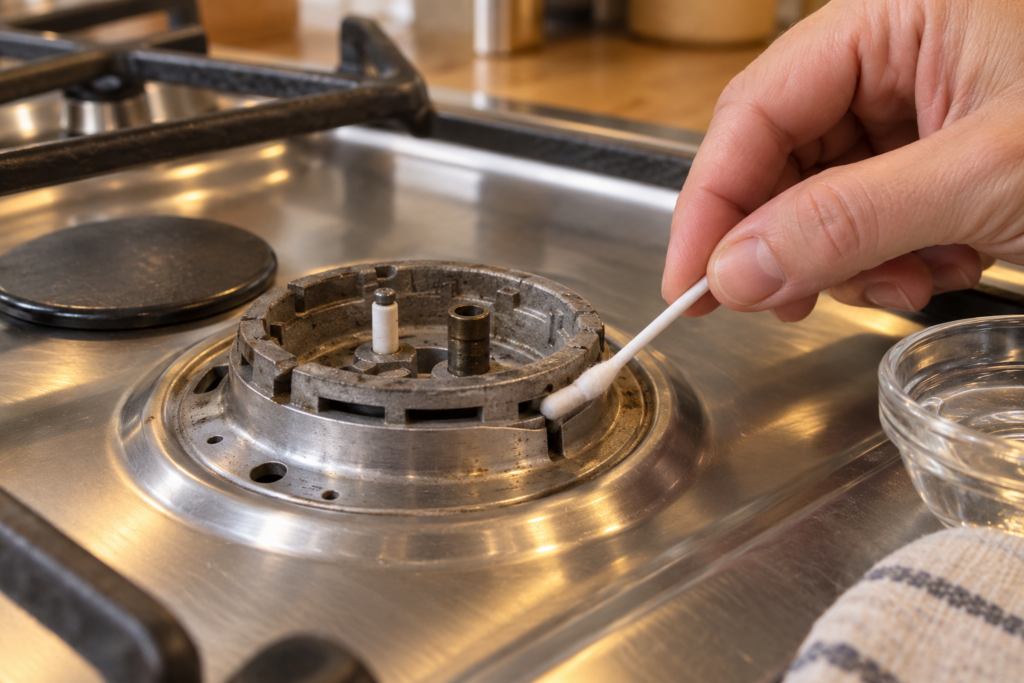
Cleaning clears the first two causes, and it needs nothing more than a brush, a paper clip and a cotton swab. Do it only with the burners cold and the gas control off.
- Lift off the grate and the burner cap without force, and look at where the cap meets the burner base.
- Clear every port in the cap with a straightened paper clip or a soft brush, working round the whole ring so no port is skipped.
- Clean the air intake slots at the base of the burner with a cotton swab dipped in isopropyl alcohol, which leaves no water residue behind in the narrow openings.
- Dry everything completely before you put it back, since damp ports burn badly on first light.
- Seat the cap flat and centered, then relight and look at the flame in a darkened room, where yellow tips show up best.
Clean all the burners in one session, because a port that looks clear on a working burner can still be half blocked. This is also the routine our DCS range maintenance guide sets out, and doing it regularly is the cheapest way to keep a yellow flame from returning.
How Can You Tell If It Is the Wrong Gas Type?
By reading the rating label and comparing it with the gas supplied to your home. The label is usually on the underside of the range top or in the manual, and it states whether the range is set up for natural gas or propane.
If the two do not match, the burners will always burn yellow, and cleaning cannot correct it. The code pages say that conversion requires an orifice change, which is work for a qualified technician with the right parts and a pressure test afterward. It is the likeliest explanation when every burner turns yellow at once, or when the yellow flame appeared right after a move, a renovation or a switch of fuel. Our LP conversion safety notice explains why that conversion is not a do-it-yourself job.
Keeping the Flame Blue
Most yellow flames are earned slowly, by boilovers and grease that nobody wiped up. A few habits keep the air path clear, and they cost almost nothing once they are routine. They also protect the other half of the range, since the same residue that blocks a port will foul an igniter electrode and make the burner slow to light.
- Wipe up boilovers when the burner is cool, before the spill bakes onto the cap and into the ports.
- Clean all the burner caps together every month or so, because ports clog evenly and a clean-looking burner can still be half blocked.
- Keep sprays and liquid cleaners away from the air intake slots, and dry everything before relighting.
- Look at the flame whenever you cook, since a change from blue to yellow tips is the earliest warning you will get.
When to Call a Technician
Call if the yellow flame survives a thorough cleaning of every burner component, if you have confirmed a gas type mismatch, or if the burner needs its air shutter adjusted, which means taking the burner apart and calibrating it. Repairs for a yellow flame start from $150 on this site, and the final price is confirmed after an on-site diagnosis, with a written estimate before work begins.
Our cooktop yellow flame page and rangetop yellow flame page list the safe checks in order, and the DCS range repair service tests gas pressure and burner settings on the same visit. If the problem is a burner that will not light at all, start with our burner not lighting guide, and for the wider picture of gas safety in the kitchen read the DCS gas range safety guide. Book a visit or send us the model and a photo of the flame.