 Michael Torres
Key Takeaways
- Store a propane cylinder outdoors, upright, in a shaded and well-ventilated place away from heat.
- Never keep a cylinder in a garage, basement, shed or enclosed patio, because a small leak can build up vapor.
- Keep cylinders well away from air conditioners, dryer vents and vehicle exhaust, and fit the valve cap when not connected.
- A standard cylinder can stay outdoors in winter; cover the grill and disconnect the tank.
- If you smell gas, do not operate any switches: leave and call your propane supplier or 911.
The Bottom Line
Keep the cylinder upright, capped and outdoors in the shade, away from heat. If you smell gas, leave the area and call your supplier or 911 first.
Most DCS grill propane tank storage mistakes are about where the cylinder sits and not about how it is connected. A cylinder is safe when it is kept upright, outdoors, shaded and away from heat, and it becomes a hazard when it is kept in the one place that feels safest: the garage, the basement or a closed patio cupboard. Our safety notice for DCS grills, which says the Series 9 Evolution and Series 7 propane models connect to standard 20 lb cylinders, is blunt about this. This guide turns it into a short list of rules, explains the reasoning behind each, and covers what to do if you smell gas.
| Where or how | OK? | Why |
|---|---|---|
| Garage, basement, shed or enclosed patio | No | A small leak can build up vapor near ignition sources |
| Shaded, ventilated spot outdoors | Yes | Gas disperses and heat stays low |
| Next to an air conditioner, dryer vent or vehicle exhaust | No | Heat sources and exhaust |
| Lying on its side | No | Liquid propane can reach the valve |
| Outdoors through the winter | Yes | Propane performs well in cold weather |
Where Should You Store a DCS Grill Propane Tank?
Outdoors, upright, in a shaded and well-ventilated place away from heat. That is the first rule in our propane tank storage notice, which says storing a cylinder in a garage, basement or enclosed patio creates a risk of gas accumulating if the valve leaks even slightly. A single spark from a water heater, a vehicle or a light switch is enough to ignite vapor that has gathered.
Keep the following in mind when you choose the spot.
- Keep it upright at all times, since horizontal storage lets liquid propane reach the valve.
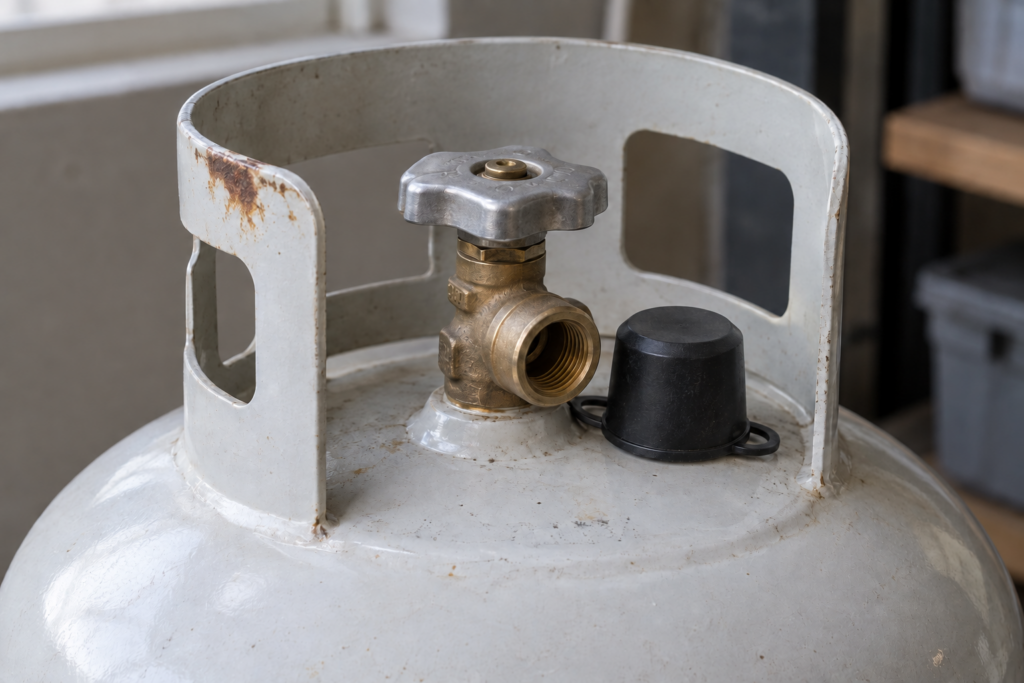
- Fit the protective valve cap whenever the cylinder is not connected to the grill.
- Keep it well away from heat sources, including air conditioning units, dryer vents and vehicle exhaust. Our notice gives a distance for this; your grill handbook and local fire code set the exact figure.
- Avoid a dark surface in direct sun in summer, because the notice lists it as a warning sign.
Can You Leave the Tank Outside in Winter?
Yes. The notice says it is acceptable to leave a standard LP cylinder outdoors through the winter, because propane performs well in cold temperatures. What it recommends is to cover the grill and disconnect the tank, and to keep the cylinder upright and capped in its usual outdoor spot rather than carrying it indoors.
Cold weather can still change how the grill behaves. Our LOW-FLAME page notes that cold can make even a half-full tank show low-pressure symptoms, so a weak flame in January is not always a fault. When the grill is out of use for months, our outdoor kitchen winterizing guide covers the rest of the shutdown.
Why Indoor Storage Feels Safe and Is Not
A garage keeps the cylinder out of the rain and away from thieves, and the cylinder looks inert when the valve is closed. The danger is the slow leak you cannot see. Propane vapor is heavier than air, so it settles low and collects in an enclosed space until something ignites it, and the garage is full of candidates: the water heater pilot, the car, the freezer compressor, a light switch. Outdoors, the same leak disperses.
The practical answer is a dedicated outdoor spot, not a compromise. A corner of the yard in the shade, on a level surface, and not under a deck or against a dark wall that bakes in the sun, works for most homes.
- A level, stable surface so the cylinder cannot tip over.
- Open air around it, not inside a cabinet unless the cabinet is designed to ventilate.
- Distance from the house openings such as windows and vents, within reason for your layout.
- A spare cylinder kept to the same rules, not tucked in a cupboard because it is not connected.
Treat an outdoor kitchen cabinet without proper ventilation as an enclosed space too, which matters for anyone with an island or a built-in grill.
Warning Signs to Watch For
Look at the cylinder each time you connect or disconnect it, and treat any of these as a reason to stop.
- A smell of gas near the cylinder when every valve is confirmed off.
- A valve cap that is missing, damaged or hard to thread on.
- A cylinder lying on its side or stored indoors in any enclosed structure.
- Corrosion on the collar, foot ring or valve assembly.
Check the cylinder in the same order every time: the cap, the collar and foot ring, the valve and then your nose. A short habit like that catches the common problems before they matter. Tell everyone in the household who changes the cylinder what to look for, because the person who swaps it at the last minute before a party is the one least likely to inspect it.
Do not try to repair a valve yourself. The notice says to take the cylinder to a propane dealer for inspection or safe disposal.
What Should You Do If You Smell Gas Near the Tank?
Move away, keep ignition sources out of it and call your propane supplier or 911 from a safe distance. The standard instruction is the same everywhere: if you smell propane, do not operate any switches, leave immediately and call your supplier or emergency services. A gas smell is never something to troubleshoot first.
After the all-clear, do not reconnect the cylinder until a dealer has inspected it. The grill's own gas-smell page, GAS-SMELL, covers odors at the grill itself and what to check when the burners are off.
Moving, Refilling and Replacing Cylinders
The same rules apply when the cylinder leaves the yard. The notice asks for a few habits that are easy to forget on a busy weekend.
- Carry the cylinder upright in the cargo area of a vehicle, with the windows open.
- Never leave a cylinder in a hot, enclosed vehicle, even for a short stop.
- Check the manufacture date stamped on the collar. The notice says a cylinder older than 12 years from manufacture must be re-qualified by a propane supplier before refilling, and federal cylinder rules use the same 12-year interval for the first requalification.
- Fit the valve cap before you carry it, and take it off only when you connect it to the grill.
Before you connect a replacement, inspect the regulator and hose for cracks or brittleness, and open the tank valve slowly. Our low-flame page says opening it too fast can put the regulator into safety bypass.
After the Season and When to Call
Disconnect and cap the cylinder at the end of the season, store it outdoors as above and note the date on your calendar to inspect it before first use. If you have any doubt about the regulator, hose or a gas smell that returns, book the grill repair service rather than guessing, and read our wider DCS grill safety guide alongside this one.
Prices are confirmed after a diagnosis on site, with a written estimate before work begins. You can book a visit or send us the model and what you noticed.