 Michael Torres
Key Takeaways
- Wind can blow out a burner while the gas valve stays open and nothing alerts you.
- The site's notice says sustained strong wind warrants postponing the cook.
- If a burner blows out, turn its valve off, wait at least five minutes and then relight.
- Never leave the grill unattended in wind, and keep a Class B extinguisher within reach.
The Bottom Line
Check the forecast, put the grill's back to the wind and never walk away. If a burner blows out, turn its valve off and wait five minutes before relighting.
Wind is the weather that most often interferes with a gas grill without making any noise. Using a DCS grill in high wind carries a risk that rain and cold do not: a gust can put a burner out while the gas valve stays open, and nothing on the grill tells you it has happened. The site's safety notice on high-wind operation says wind can extinguish burners mid-cook without triggering a safety shutoff, allowing gas to keep flowing and collect beneath the grill or in low spots on the patio. This guide turns that notice into a routine you can follow on a windy day. If you smell gas at any time, treat it as an emergency and read the GAS-SMELL code page.
| Situation | What to do | Why |
|---|---|---|
| Strong sustained wind forecast | Postpone the cook | The site notice says sustained high wind warrants postponing |
| Breezy day, grill in use | Face the grill back to the wind and stay close | Shields the burners and lets you notice a blow-out |
| A burner goes out | Turn its valve off, wait five minutes, relight | Lets the gas disperse before the igniter fires |
| Burners keep blowing out | Shut everything off, including the gas supply | Reschedule for calmer weather |
What Happens When Wind Blows Out a DCS Grill Burner?
The burner goes out and the gas keeps flowing, because the valve is still open and nothing may shut it. The notice says wind can put a burner out without triggering a safety shutoff, and that these grills are designed on the expectation that the operator monitors them while they cook, which wind makes much harder. We could not confirm from the manufacturer's documentation how every model is protected, so do not count on a shutoff, and check your owner's manual for how your own model is built.
Unburned gas that reaches a flammable concentration near the ground is the danger. The notice warns that relighting the grill with gas accumulated can cause a powerful flash fire. Wind also carries burning embers to combustible surfaces, which is a second reason to take it seriously.
How Much Wind Is Too Much for a Gas Grill?
The site's notice says sustained strong wind warrants postponing the cook. It gives no exact limit that we could confirm with the manufacturer, and gusts can blow out a burner even in moderate wind, so the line you draw should depend on your patio and your own judgment, not on one forecast number. A grill in a sheltered built-in outdoor kitchen behaves differently from a freestanding cart in an open yard.
Check the forecast before you light the grill. If the wind is strong or gusting, ask whether the meal needs to be on the grill at all. Moving it indoors costs a little convenience and nothing else.
What Should You Do If a Burner Blows Out?
Turn that burner's control valve off straight away, wait at least five minutes for the gas to disperse, and then relight following the manufacturer's lighting procedure. That sequence is the notice's instruction, and the pause matters most. Rushing it is how a flash fire happens.
- Turn the control valve for the burner to off — do not leave it open while you decide what to do.
- Step back and wait at least five minutes — let the gas clear from under and around the grill.
- Keep the lid closed or open as the manual says — and stay well clear of the burner area.
- Relight using the normal procedure — never with accumulated gas present.
- If it blows out again, stop — shut off all burners and the gas supply.
Warning Signs That the Wind Is Winning
The notice lists signs to watch for while you cook. Any of them means a burner may have gone out, so check the grill and do not simply carry on.
- A sudden drop in temperature — the grill cools without you touching the controls.
- Continuous clicking of the igniter — it can mean a burner has extinguished and the igniter is trying to relight it.
- A smell of gas near the grill — while it is supposedly running, it is a stop sign.
- A flame that changes color and disappears — blue turning to orange or yellow, then gone.
- The lid lifting in gusts — it exposes food and flame to direct wind.
Setting Up the Grill for a Windy Day
A few choices before you light the grill reduce the risk a good deal. The notice recommends them, and they cost nothing.
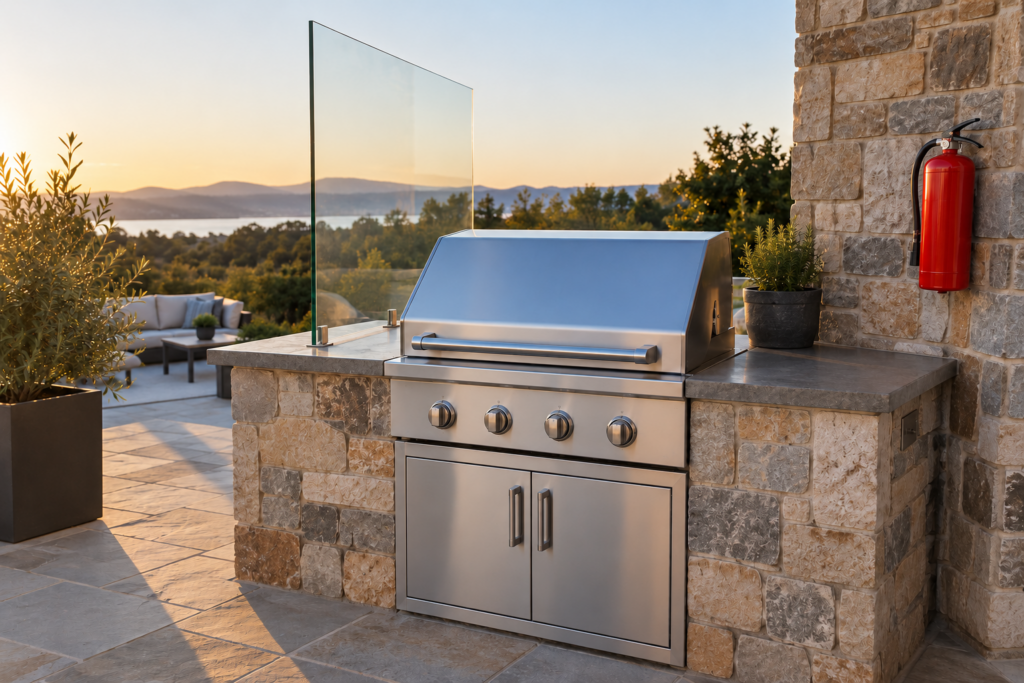
- Position the grill with its back to the prevailing wind — so the wind does not blow straight onto the burners.
- Stay within sight and arm's reach — never leave it unattended in wind.
- Keep the lid closed as much as you can — the notice says not to cook with the lid open in strong wind.
- Secure lightweight objects — chairs, umbrellas and tablecloths can blow into the flames.
- Keep a Class B extinguisher within reach — the notice asks for it whenever you grill in challenging weather.
Keep the grill clear of overhanging branches, eaves and umbrellas as well, since the grease fire notice asks for at least 36 inches from any combustible surface. A roof or umbrella over the grill is not a wind shelter, and it adds a fire risk of its own. See also our outdoor appliance safety in extreme weather guide.
After a Windy Cook
The checks that matter come after the grill has cooled, because a burner that went out and was relit may have left something behind. A few minutes of attention then are cheaper than a second incident.
- Confirm every control valve is off — and shut the gas supply at the tank or the line if you will not use the grill again soon.
- Look for scorch marks or discoloration — around the burners, the igniter wiring and the side shelf.
- Check that the windscreen and side shelf are secure — a gust that moved them may have loosened their fixings.
- Sniff low near the grill — the notice warns that gas can collect in low spots on the patio, so the smell may sit near the ground rather than at the lid.
If any of those turn up something, treat the grill as out of service until it has been checked.
When to Have the Grill Checked
If burners keep blowing out despite repositioning, shut off all burners and the gas supply and reschedule cooking for calmer conditions, as the notice says. If you notice gas odor, a burner that will not relight, or damage after a gust, have the grill looked at before the next cook. Our grill repair service includes a full gas-circuit leak test before sign-off. The final price is confirmed after on-site diagnosis, with a written estimate before any work begins.
For the leak test you can do yourself, read the gas line leak testing notice, and for the wider picture see DCS grill safety. When you need a visit, book one here or send us the model number and what happened.