 Michael Torres
Key Takeaways
- COMP-CLICK means the compressor is trying to start and failing, usually the start relay or capacitor, not the windings.
- A relay or capacitor repair starts from $180; a full compressor replacement starts from $420.
- A clicking compressor is actually a better sign than a silent one — it points at the cheaper fault more often.
- Clearing the condenser coils regularly is the single best way to prevent this failure from happening at all.
- A diagnostic visit is the only reliable way to tell a relay fault from failed windings before paying for either.
The Bottom Line
A clicking compressor is usually the cheaper fault to fix — get it diagnosed before assuming the whole compressor needs replacing.
DCS outdoor refrigerator compressor repair cost is the question that follows a clicking sound coming from behind the unit instead of the steady hum a healthy compressor makes. This site's COMP-CLICK error page documents that pattern: the compressor clicks and will not start, which is a distinct fault from a fridge that runs constantly but stays warm, and the two are priced very differently.
| Symptom | Likely part | Typical repair cost |
|---|---|---|
| Repeated clicking, compressor never starts | Failed start relay or start capacitor | from $180 |
| Clicking stops, unit runs but stays warm | Compressor windings themselves have failed | from $420 |
| Compressor hums, then clicks off (thermal overload) | Overload protector tripping repeatedly | from $200 |
| No sound at all from the compressor area | Power supply or control board fault | from $150 |
What Does the COMP-CLICK Error Mean?
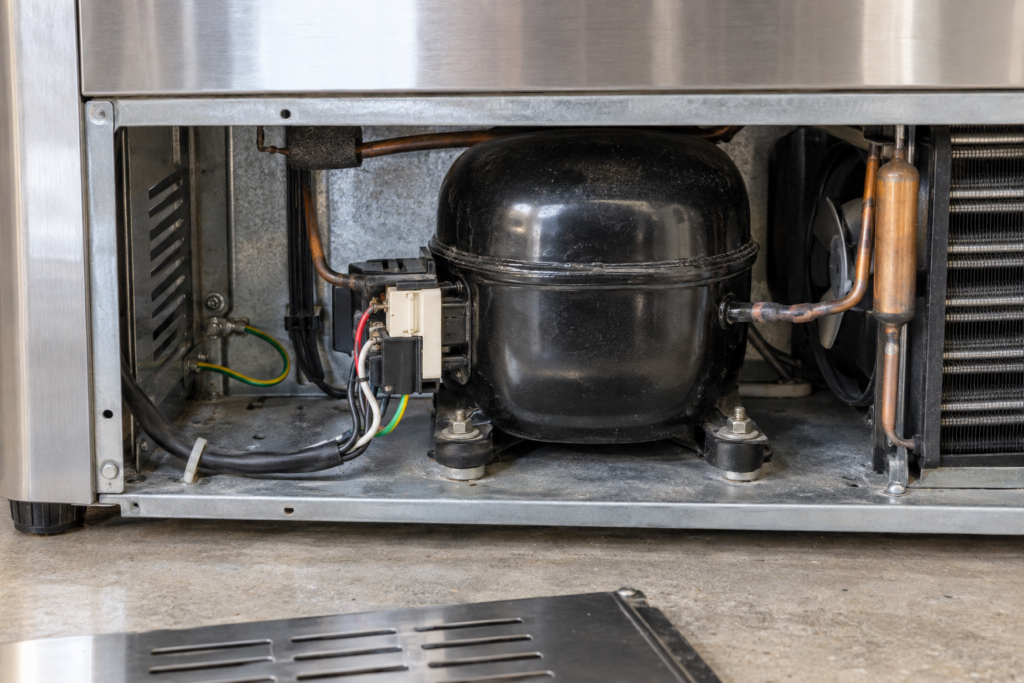
COMP-CLICK means the compressor is attempting to start but clicking off before it can run, which almost always points at the start relay or start capacitor rather than the compressor's internal windings. Those two small components are responsible for giving the compressor motor the extra jolt of current it needs at startup, and when either fails, the motor tries, stalls, and the overload protector clicks it back off in a repeating cycle.
- Repeated clicking every few seconds is the classic relay pattern, the cheaper of the two outcomes.
- A single click followed by silence can mean the overload protector has tripped and is cooling down before trying again.
- No sound at all shifts suspicion toward the power supply or control board rather than the compressor itself.
This is a meaningfully cheaper fault than a compressor with failed windings, which is why COMP-CLICK is worth pricing separately rather than folding into a single "compressor problem" estimate.
The overload protector itself is worth understanding, since it is the part actually producing the click sound in most cases. It is a small thermal switch bolted to the compressor housing, and its job is to cut power the instant the motor draws more current than it should during a stalled start attempt. A healthy overload protector clicking on a failed relay is doing exactly what it is designed to do — protecting the compressor motor from burning out while the real fault, the relay, goes unaddressed.
How Much Does a Compressor Repair Cost?
A start relay or capacitor replacement for a COMP-CLICK fault starts from $180, while a compressor that has failed internally and needs full replacement starts from $420, since that job involves recovering refrigerant, replacing the sealed unit and recharging the system. A diagnostic visit starts from $89 and is the only reliable way to tell which of the two you are facing before committing to either repair.
The clicking sound itself is actually good news in a strange way: a compressor that clicks is still trying to run, which points toward the cheaper relay fault far more often than toward the expensive internal failure.
A compressor with genuinely failed windings, by contrast, usually goes silent rather than clicking, or hums continuously without ever attempting a normal start cycle. That distinction alone is often enough for a technician to make a strong initial call before even opening the access panel.
Is It Worth Fixing an Outdoor Refrigerator Compressor?
Yes, in most cases, because a start relay or capacitor repair is a fraction of the cost of a new outdoor refrigerator, and it restores the unit to full working condition without touching the cabinet, shelving or door seals. Because the relay and capacitor sit outside the sealed refrigerant system entirely, replacing them carries none of the complexity or extra cost that any repair involving refrigerant recovery and recharging does. A full compressor replacement is a larger decision, and on a unit that is otherwise in good condition it is still usually cheaper than replacement, though the gap narrows.
Age matters more for this decision than the fault itself does. A five-year-old unit with a failed compressor is usually still worth the repair, since the cabinet, shelving and door hardware all have plenty of life left. A unit already past ten years, facing a compressor replacement on top of other wear, is a fairer comparison against a new outdoor refrigerator built with more current insulation and efficiency standards. There is no fixed cutoff age where the math flips, so treating the diagnostic visit as an opportunity to also ask about the unit's overall condition, not just the compressor, gets a more useful answer than looking at the compressor cost in isolation.
- Listen for the specific pattern: repeated clicking every few seconds points at the relay, not the windings.
- Check for warmth on the compressor housing itself — a hot compressor that clicks off is consistent with an overload trip, a cheaper fix than failed windings.
- Note how old the unit is before booking; a compressor failure on a unit already past ten years changes the replacement math.
- Ask for the relay to be tested, not just replaced on assumption, since a bad connection elsewhere can mimic the same symptom.
- Compare the repair quote against the unit's age and remaining expected life before committing either way.
- Ask whether the diagnostic fee applies toward the repair if you proceed the same visit.
None of this changes with the season, since compressors run year-round in most climates once the unit is stocked — outdoor refrigeration does not get the same winter break that a grill or a rangetop does, which is worth remembering when deciding how proactive to be about the coils.
Can You Prevent a Compressor Failure Like This?
Keeping the condenser coils clear of dust and debris is the single most effective thing an owner can do, since a restricted condenser makes the compressor work harder on every single start cycle and shortens the life of the very components that fail first, since the compressor has to draw more current on every single start attempt to overcome the added resistance. Outdoor installations in dusty areas or near landscaping that sheds debris need this checked more often than an indoor kitchen fridge would.
- Clear leaves, dust and debris from the condenser vents at least twice a year.
- Keep at least a few inches of clearance around the unit for airflow, even in a built-in enclosure.
- Address any clicking sound immediately rather than letting the compressor cycle repeatedly against a failing relay.
Booking the Repair
Our outdoor refrigerator repair service covers the compressor, start relay, capacitor and the sealed refrigerant system behind a COMP-CLICK fault, and diagnosis on-site tells you which repair path applies before a part is ordered. A preventive maintenance visit can catch a weakening relay before it strands the whole unit. Our broader outdoor refrigerator repair or replace overview is the parent guide for whole-unit decisions this article does not try to replace. Schedule a diagnostic visit or describe the sound you are hearing and we can often narrow down the fault before a technician arrives.