 Michael Torres
Key Takeaways
- FAN-FAIL means the exhaust fan motor is not running — the lights, filters and controls are usually unaffected.
- The cooktop stays safe to use without the fan, but smoke and grease will build up in the kitchen instead of venting out.
- A motor replacement starts from $250, well below the cost of replacing the whole range hood.
- A motor that fails again soon after replacement usually points at a restricted duct, not a bad part.
- This is a component decision, not a whole-hood one — see the range hood overview for the wider question.
The Bottom Line
A failed fan motor is almost always worth fixing on its own — the exception is a repeat failure, which points at the duct instead of the part.
Whether to fix a DCS range hood fan motor is a narrower question than whether the whole range hood is worth keeping, and it usually has a clear answer: yes, because the fan motor is a self-contained, moderately priced part inside a hood that otherwise still has working lights, filters and housing. FAN-FAIL specifically reports the fan motor, not the hood as a whole, and treating it that way keeps the repair decision simple.
| Situation | Worth fixing? | Why |
|---|---|---|
| Fan will not run at any speed, lights work | Yes | Fault isolated to the motor, not the whole hood |
| Fan runs but very weakly | Check filters and duct first | Often airflow, not the motor itself |
| Motor replaced once already, failing again soon after | Ask about the duct and backpressure | Repeated motor failure often means restricted exhaust |
| Hood also has failing lights and control panel | Compare against the hood overview | Combined faults may tip toward the wider decision |
What Does the FAN-FAIL Error Mean on a DCS Range Hood?
FAN-FAIL means the exhaust fan motor is not running when the control calls for it, and this site's FAN-FAIL error page documents the underlying condition plainly: the motor is not running at all. It does not report a fault with the lights, the grease filters or the control panel, all of which typically continue working normally when this specific fault appears.
- Fan does not spin at any speed despite the switch being on and the lights working.
- A faint burning smell near the hood before the fan stopped, which can mean the motor windings overheated before failing.
- The fan stopped suddenly mid-use rather than gradually weakening, which points at the motor rather than a slow duct blockage.
Because the range hood already has its own overview guide on this site covering the full repair-or-replace decision for the appliance as a whole, this guide focuses specifically on the fan motor as a component, and refers back to that DCS range hood worth repairing overview for anyone weighing the hood as a whole rather than just this one part.
Is It Safe to Use the Cooktop With the Range Hood Fan Not Working?
Yes, the cooktop itself remains safe to use with the exhaust fan not running, but smoke, grease particles and moisture will accumulate in the kitchen air instead of being pulled outside, and that build-up settles on cabinets and surfaces over time. The bigger risk is indirect: cooking without ventilation for an extended period, especially with gas, raises indoor air quality concerns beyond what the range hood was there to manage in the first place.
This site's error-code page for the fault states it plainly: stop using it and call a technician immediately, which reflects that a motor drawing current without turning can overheat rather than simply sit idle.
Is a DCS Range Hood Fan Motor Worth Fixing on Its Own?
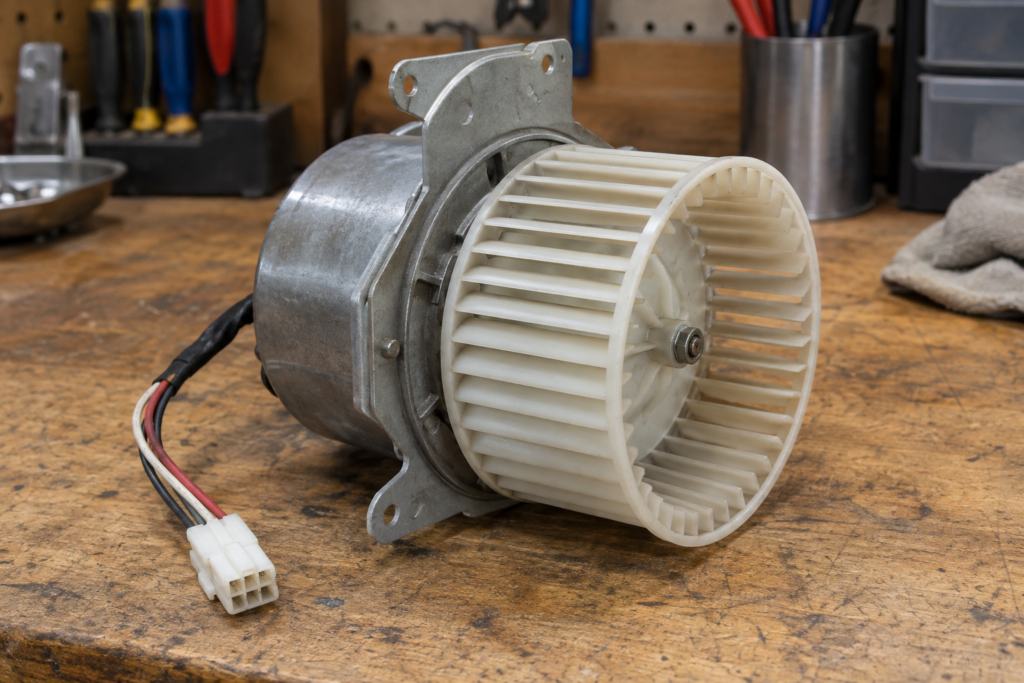
Yes, fixing the fan motor on its own is worth it in the large majority of cases, because the part is self-contained, the repair does not require touching the hood's housing, lighting or control electronics, and the cost sits well below replacing the entire range hood. The repair typically starts from $250, which the site's own error-code page for this fault confirms as the starting point once a technician has the housing open.
The case for weighing the wider replacement decision instead is when the fan motor has already been replaced once and has failed again quickly, since repeated motor failure often means the duct is restricted and putting backpressure on every motor installed, a problem no new motor alone will fix.
It is also worth asking, before any repair, how the hood is used day to day. A hood mounted over a high-output gas or induction range that runs for long stretches during heavy cooking puts more continuous load on the motor than one used briefly over an electric cooktop, and that context helps a technician judge whether a standard replacement motor is enough or whether a heavier-duty part is the better long-term choice. Mentioning this kind of usage detail when booking the visit costs nothing and can save a second callout down the line.
The same logic applies to households that run the exhaust fan for long stretches even when nothing is actively cooking, simply out of habit — that extra run time adds up over a year in ways a lightly used fan never experiences.
A hood used heavily for high-heat cooking, such as searing or wok cooking, tends to load the motor harder over its lifespan than one used mainly for light simmering, which is worth mentioning to the technician since it can shift the balance toward a heavier-duty replacement motor.
- Check whether this is the first motor failure or a repeat — that changes what the real fault is.
- Have the duct and exterior vent inspected alongside the motor if this is a repeat failure.
- Confirm the lights and controls still work normally, which keeps this an isolated component repair.
- Get a written estimate that separates the motor cost from any duct work found necessary.
- Ask whether the replacement motor carries its own warranty, separate from any warranty on the hood as a whole.
- Keep the receipt and the part details in case a second failure happens sooner than expected.
None of these checks require removing the motor yourself — they are simply the observations worth having ready before a technician arrives, since they narrow down the likely cause faster than a cold diagnosis starting from nothing.
How Much Does a Range Hood Fan Motor Repair Cost?
A range hood fan motor replacement starts from $250, with a diagnostic visit from $89 to confirm the motor itself, rather than the duct or the control board, is the actual point of failure. That range sits well under the cost of a full range hood replacement, which is the main reason this specific fault is treated as a repair decision rather than a replacement one on this site.
A preventive maintenance visit is worth considering afterward, particularly if the duct turned out to be part of the problem, since a cleaner duct reduces the load on whichever motor is installed next.
- Confirm the fault with a diagnostic visit before ordering a motor.
- Ask whether duct backpressure is being checked, not just the motor housing.
- Get the total cost in writing, including any labour for accessing the motor.
Booking the Repair
Our range hood repair service covers the fan motor along with the duct and control switch it depends on, and a technician will check for restricted airflow before assuming a second motor will hold up any better than the first. Schedule a diagnostic visit or tell us whether this is a repeat motor failure so we can check the duct at the same time.