 Michael Torres
Key Takeaways
- A DCS grill lid that will not seal is usually a hinge alignment problem and not a warped lid.
- A gap on one side points to the hinges, and a gap all the way round points to thermal warping.
- Tightening or re-seating the hinge bolts costs nothing, and technician repairs start from $150.
- A poor seal is an efficiency issue and not a safety hazard, so there is time to check properly.
- Stripped hinge bolts, a bent lid or corroded mounting points are the signs that the fix may not be worth it.
The Bottom Line
Tighten and re-seat the hinge bolts and read the gap before you spend anything. A bent lid or corroded mounting points mean weighing the whole grill.
When the lid of a DCS grill stops sitting flat, the first worry is a warped lid and a bill that goes with it. The site's own code page takes the opposite view. It says a lid that no longer seals against the firebox is usually a hinge alignment problem and not a warped lid, and the adjustable hinges that carry the heavy stainless steel lid are the first place to look. That changes the repair decision. A grill with a sagging lid is often an afternoon with a wrench, and the cases that are not are easy to recognize once you know the signs.
| What you find | What it means | Worth fixing? |
|---|---|---|
| Lid sits tilted, gap on one side only | Hinge bolts loose or out of adjustment | Yes, usually a free adjustment |
| Gap appears evenly all the way round | Possible thermal warping of the lid | Get it assessed before spending |
| Lid structure visibly bent after an impact | Damaged lid shape | Depends on the quote and the grill |
| Hinge bolts stripped, mounting points corroded | The fixing points are failing | Weigh the whole grill |
Is a DCS Grill Lid Worth Fixing?
Usually yes, because the commonest cause is cheap to correct. This site's lid not sealing page lists loose hinge bolts first, and they cost nothing to tighten. A repair that needs a technician starts from $150 according to the same page, with a 30 to 60 minute visit, and the final price is confirmed after diagnosis on site, with a written estimate before work begins.
It also helps that a poor lid seal is not a safety hazard. The page says it is an efficiency issue and the grill can be used normally while an adjustment is arranged. You are not under pressure to decide fast, so there is time to check the cheap causes properly.
The seal matters mostly for how the grill cooks. Heat that leaks around the lid forces longer preheats, makes it harder to hold a steady temperature for slow cooks, and lets smoke escape from the sides instead of the rear vent. None of that damages the grill, but all of it makes the grill harder to use well, which is why a sagging lid is worth sorting out rather than living with.
What Does a Poorly Sealing Lid Look Like?
It looks like heat going where it should not, and it shows up in the cooking before it shows up in the metal. The four signs the site lists are the ones to look for.
- A visible gap between the lid and the firebox when it is closed, sometimes with heat shimmer or daylight along one side.
- Slow preheating because heat is escaping through the gap, which also makes a steady cooking temperature harder to hold.
- A tilted or offset lid where the handle is off-center or one side sits higher than the other.
- Smoke from the lid edges instead of mostly from the vent at the rear.
Hinge or Warp: The Check That Decides It
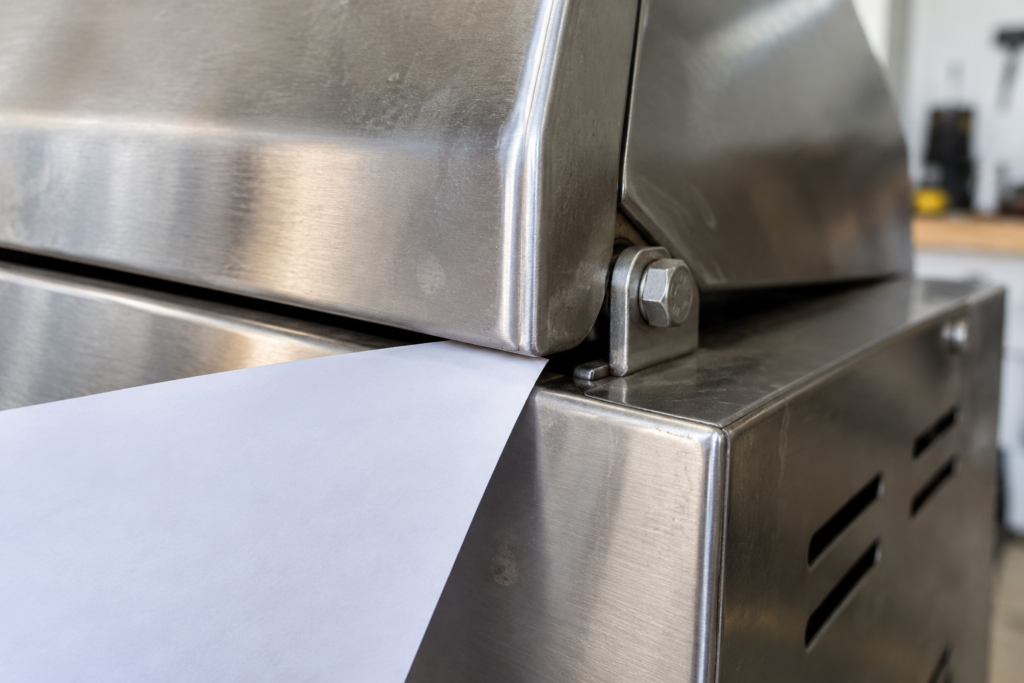
You can tell the difference with the lid and a sheet of paper, and the answer decides whether you are in cheap territory. The code page describes both checks.
- Lower the lid very slowly and watch whether it touches the firebox evenly on all sides at the same moment.
- Read the gap. A gap on one side only points at hinge misalignment, and a gap that appears uniformly on all sides points at lid warp.
- Slip a sheet of paper in at several points around the edge with the lid closed, and tug it to feel whether the seal grips everywhere.
- Open the lid fully and find the hinge bolts on both sides where the lid attaches to the cart or firebox.
- Tighten any loose bolts and look again at how the lid sits.
Most DCS grill hinges have slotted adjustment holes. Loosening the bolts slightly and nudging the hinge before retightening can correct a minor drop. Work with the grill cold, and support the lid when you loosen anything.
What a Technician Will Look At
A visit for a lid that will not seal is mostly a matter of working through the same three questions in order, and it helps to know them so you can describe what you have already tried.
- Whether adjustment closes the gap — if it does, the repair is a hinge repair and nothing more.
- Whether the lid is bent — a lid that stays distorted after heat cycling does not return to shape on its own.
- Whether the mounting points are sound — damaged or corroded fixing points on the firebox change what is worth doing.
The first answer is the one every owner hopes for, and on a grill that has been looked after it is also the most likely.
When Is a Sagging Lid Not Worth Fixing?
When the damage is in the places that adjustment cannot reach. The code page says to stop if the hinge bolts are stripped and cannot hold the lid steady, or if the lid drops suddenly or unpredictably, because that carries a risk of injury. It lists three other reasons to call a professional: a hinge adjustment that does not close the gap, a lid that stays bent after heat cycling, and hinge mounting points on the firebox that are damaged or corroded.
The last of those is the one that tips the decision. Corroded mounting points are a symptom of the firebox itself ageing, and if the metal around them is going, a new hinge or even a new lid will not last. In that situation put the lid repair beside the grill's other problems and read our guide to DCS grill repair or replace. For a grill that has been mostly trouble-free, the parent decision is in is a DCS grill worth repairing.
Protecting the Lid From Here
Thermal warping comes from sustained extreme heat, and the page names repeated overheating events and running every burner at maximum with the lid closed as the causes. Easing off is the fix. If the grill has been running too hot, our page on grill overheating explains how to check with a thermometer on the grate.
- Avoid full-power runs with all burners and the lid shut, unless a recipe demands it.
- Check hinge bolts at the start of the season and after any move of the cart.
- Keep objects off the lid and clear of the cart when it is open, since impact damage is the repair you cannot adjust away.
Our grill repair service covers hinges, lids and the other grill faults. Tell the technician where the gap sits and whether the bolts are tight. When you are ready, book a visit or send us the grill model and a photo of the gap.