 Michael Torres
Key Takeaways
- F7, F8 and F9 on a DCS wall oven each point to a different part of the door lock: heat around it, the switch, or the motor.
- On an otherwise sound oven, a door lock repair is usually worth doing, and the written estimate tells you for certain.
- Do not force a locked door; let the oven cool and the lock motor will retract on its own.
- A torn door gasket is the cheapest cause of F7 and should be replaced before the next self-clean.
- The repair stops making sense when the same oven also has a control board fault or other costly failures.
The Bottom Line
Let the oven cool, check the gasket and latch slot, and fix the lock if the rest of the oven is sound. Judge an old oven as a whole.
A door that will not unlock after a self-clean cycle is one of the more alarming things a wall oven can do, because it looks like the whole oven has died. It has not. The door lock on a DCS professional wall oven is a small system of its own, made up of a lock motor, a latch hook, a micro-switch that tells the control board where the latch is, and a thermistor that watches the temperature around it. When one of those parts fails, the oven shows an F7, F8 or F9, and the question that follows is whether the oven deserves the repair. For most DCS wall ovens that are otherwise sound, it does, and this guide shows how to tell. It sits under our overview of whether a DCS oven is worth repairing.
| Situation | Usually worth fixing? | Why |
|---|---|---|
| Door stuck locked after self-clean, F9, oven otherwise sound | Yes | A stuck latch or dry mechanism is a small repair |
| Lock motor worn or seized | Yes | A single motor is a bounded repair on a good oven |
| F7 repeating during self-clean with a torn gasket | Yes, gasket first | The cheapest cause is also the most likely |
| F8 that clears and returns | Yes | That pattern points to a failing micro-switch |
| Lock fault on an old oven with other faults | Weigh it up | The next failure may be the one that decides it |
Is a DCS Oven Door Lock Motor Worth Fixing?
Yes, in most cases where the oven is otherwise sound. A door lock fault on this site starts from $150, which is the lower of its two repair levels, and the lock is one part of the oven that can be replaced without touching the heating or the controls. The answer turns the other way when the same oven also has an expensive electronic fault, or when it is old enough that this repair is simply the first of several.
The price is confirmed after an on-site diagnosis, and you receive a written estimate before work begins, so you decide with a real number in front of you.
What Do F7, F8 and F9 Each Point To?
Each names a different part of the lock, and that matters because the three repairs are not equal. This site's code pages for DCS wall ovens describe them separately.
- F7, door lock over-temperature — the area around the lock got too hot, almost always during self-clean. The causes are a worn door gasket letting heat into the frame, a lock motor running hot, or a faulty thermistor reporting falsely high.
- F8, door lock switch — the micro-switch that confirms the latch position is worn, its wiring has loosened, or the latch hook is bent or misaligned and never reaches the switch.
- F9, door lock motor stuck — the motor did not finish its travel in time, because it is worn or seized, because something is blocking the latch, or because the mechanism has dried out.
The gasket, the wiring and the lubrication are the cheap end of that list. The motor and the micro-switch are the parts that need a technician, and what a technician does about each is plain enough to know in advance.
- Motor stiff after cleaning and lubrication: the lock motor is replaced, which means disassembly of the lock area.
- Latch rod bent or broken: the whole lock assembly is replaced, because a bent rod cannot be straightened reliably.
- Micro-switch with worn contacts: the switch is replaced, and the wiring and the latch alignment are checked at the same visit.
What Should You Do If the Door Is Locked Shut?
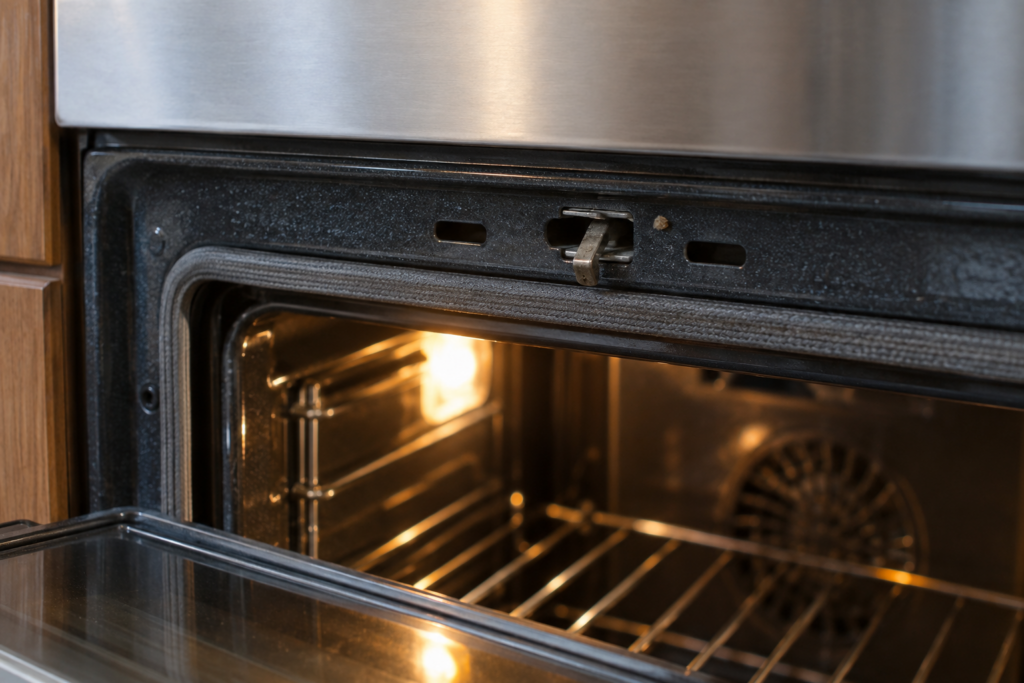
Do not force it, and let the oven cool. The F7 page says the lock motor retracts by itself once the oven falls below about 250 degrees Fahrenheit, and the F9 page says a five-minute breaker reset and a complete cool-down should let the motor unlock the door. Forcing a stuck latch can shear the latch rod or damage the door frame, and it turns a small repair into a large one.
What Can You Check Before Paying for a Repair?
Six checks cost nothing and tell you which of the three codes you really have. Do them with the oven cool and the power off at the breaker.
- Inspect the door gasket all the way round, paying particular attention to the corners, for tears, flat spots or sections that have separated from the groove.
- Look into the latch slot at the top of the oven opening for baked-on food or a displaced guide, and clear it with a cotton swab and warm water.
- Check the door alignment by looking at the gap around the perimeter, since a uniform gap means the door sits square.
- Slide the latch by hand if it is reachable. It should move smoothly under light finger pressure, and stiffness points to lubrication or an obstruction.
- Apply a little food-safe silicone lubricant to the latch rod if it is stiff, never to the motor or the switch contacts.
- Re-seat the lock connector if you are comfortable reaching it, after photographing the routing, then restore power and test.
Photograph the oven door, the gasket corners and the latch slot before you start, and again afterward. Pictures make a phone description to a technician far more precise, and they show whether a worn corner has changed between visits.
If the fault clears and stays away, you have fixed it for the price of a cloth. If it returns, the intermittent pattern tells the technician where to look first.
When the Repair Stops Making Sense
A lock repair stops making sense when the oven around it is failing. If the same wall oven is also showing a control board fault, which this site lists at a higher starting price, or an oven that no longer heats properly, then the lock is one of several costs and the oven is better judged as a whole. Our DCS oven worth-repairing guide sets out how age and repair history change the answer.
Self-clean deserves a word, because it is where F7 appears. The cycle takes the oven to extreme temperatures, and a gasket that has worn is the usual reason the lock area overheats, so replacing a torn gasket is worth doing before you run the cycle again. Our oven self-clean safety guide covers what to prepare before each run.
Getting It Fixed
Have the code, the model and what the door did to hand. The pages for F9, F8 and F7 list the safe checks in order, and our DCS oven repair service replaces lock motors and micro-switches and tests the thermistor on the same visit. If the door is also leaking heat at the seal, see our wall oven door not sealing guide. Book a visit or send us the code and whether the door is locked or just misbehaving.