 Michael Torres
Key Takeaways
- Let DCS cast-iron grates cool completely before you remove them, and wipe them after each use.
- For a deeper clean, soak for no more than 30 minutes and scrub with a non-metallic brush.
- Dry the grates at once and apply a very light coat of cooking oil to keep the seasoning.
- Never put DCS cast-iron grates in a dishwasher, because the detergent strips the seasoning and speeds up rust.
- Replace a grate that is cracked, severely rusted or rocks on its feet, rather than cleaning it.
The Bottom Line
Cool, wipe, soak briefly, dry and oil, and keep the grates out of the dishwasher. A grate that is cracked, badly rusted or unstable needs replacing, not more cleaning.
The continuous cast-iron grates on a DCS cooktop are the part you touch most and think about least. They run across the whole surface so that a pot can slide from one burner to the next without being lifted, which is a joy to cook on and a nuisance to clean, because grease and food land everywhere at once. This site's own notice for the CPU-366 and CPU-486 cooktops treats the grates as a safety item as well as a cleaning chore. Strip the protective seasoning with the wrong method and the iron rusts, and a rusted grate can flake into food or weaken under a heavy pot.
| Warning sign on the grate | What it suggests | What to do |
|---|---|---|
| Orange or brown rust spots | The seasoning has worn through | Scrub, dry, re-season, and watch it |
| Flaking or pitting of the coating | Damage to a porcelain enamel finish, if your model has one | Stop using harsh methods and monitor |
| Grate feet rock on the cooktop | Debris underneath, or a distorted grate | Clean under the feet; replace if it still rocks |
| Hard carbon that normal cleaning will not lift | Buildup left too long | Soak briefly and scrub with a non-metallic brush |
| Grease pooling around the feet | Fire risk if drips reach the burner area | Clean it now |
How Do You Clean the Cast-Iron Grates on a DCS Cooktop?
Let them cool completely, wipe them after each use, and give them an occasional soak and scrub with a non-metallic brush. That is the routine in this site's cooktop grate cleaning advisory, and the point of it is to keep the seasoned surface intact. Cast iron holds heat for a long time after the burners are off, so removing a warm grate is the quickest way to a burn.
The advisory's order of steps is worth following as written, because each step protects the next one.
- Let the grates cool fully before you lift them off the cooktop.
- Wipe them with a damp cloth after each use, so surface grease does not carbonize.
- For a deeper clean, soak in hot soapy water for no more than 30 minutes, then scrub with a stiff non-metallic brush.
- Rinse thoroughly and dry at once and completely, and never leave wet cast iron sitting on a dish rack.
- Rub on a very light coat of cooking oil with a paper towel to keep the seasoning layer in place.
Can DCS Cooktop Grates Go in the Dishwasher?
No. The advisory says never to put DCS cast-iron grates in a dishwasher, because harsh detergent strips the seasoning and speeds up rust. It is the single most damaging shortcut owners take, and it is tempting because the grates are large and greasy.
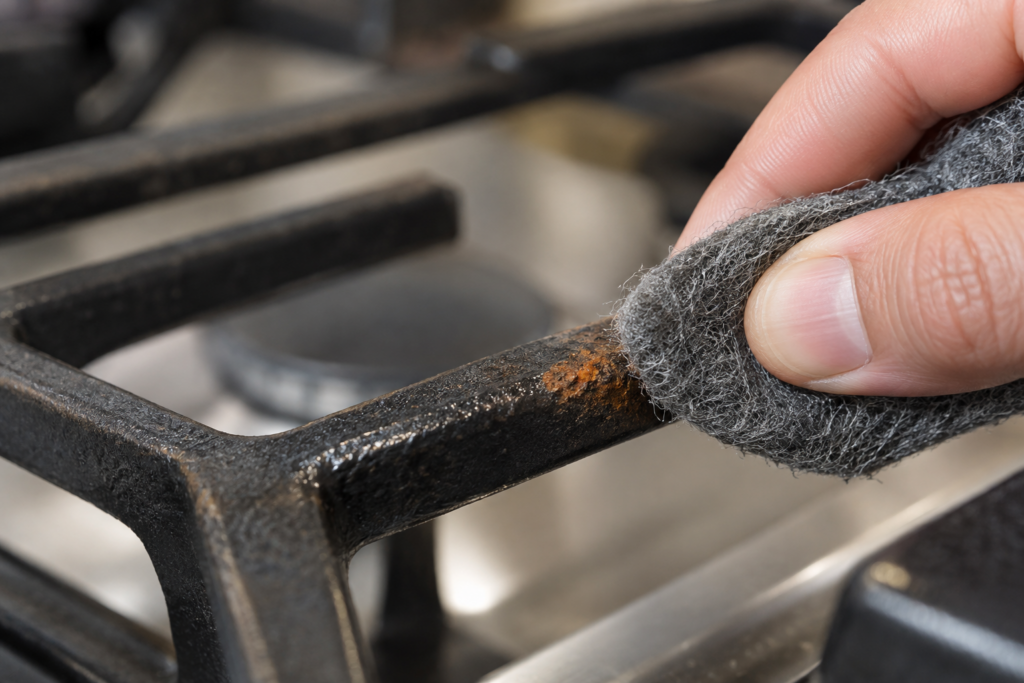
Keep the same logic for the other tools. A stiff brush is fine, but a metal scraper or steel wool can scratch away the same protective layer the dishwasher would. If a deposit will not move with soaking and a non-metallic brush, soak it a second time and give the carbon a chance to soften instead of reaching for something harsher.
What Should You Do About Rust on a Grate?
Scrub it off, dry the grate, re-season it with oil and watch the spot at the next cleaning. The advisory describes exactly that for rust spots, using a rust-removing pad. A light surface patch caught early is cosmetic and comes out easily. It spreads when the grate is left damp or the seasoning is stripped.
The line to watch is structural. Grates that are cracked, severely rusted or no longer sit flat should be replaced and not cleaned. The advisory says to order original replacement grates for your cooktop model, and warns that using a damaged grate is a safety hazard and can void the warranty. Treat a grate that rocks on its feet the same way, because a pot of boiling liquid on an unstable grate is the situation this advice exists to prevent.
DCS Cooktop Grate Cleaning After a Spill
A boilover is the moment grease reaches the places a wipe-down misses. The advisory flags grease pooling around the grate feet as a fire risk if drips reach the burner area, so after a spill lift the grates off once everything is cool and clean the surface beneath them as well as the iron itself.
- Turn the burners off and wait until the grates and the surface are cold to the touch.
- Remove the grates and set them where they will not scratch the cooktop.
- Absorb liquid with a clean cloth, particularly around the burners and ignition parts.
- Clean the feet and the surface beneath before the grates go back, so the grease does not return with them.
If liquid has got into the ignition area and the cooktop starts clicking on its own, read our page on continuous sparking before you restore power.
What You Need and What to Leave in the Cupboard
The kit is small and cheap, and nothing in it is specialist. What matters more is what stays out of it, because the cast iron is protected by a thin seasoned layer that harsh products remove.
- A damp cloth for the wipe after each use.
- A stiff non-metallic brush for the deeper clean, which scrubs without scratching the surface.
- A rust-removing pad kept for the occasional rust spot, not for routine cleaning.
- Cooking oil and paper towels for the thin protective coat after every thorough clean.
Leave out abrasive powders, metal scrapers and the dishwasher. Each of them strips the layer you are trying to keep, and a grate that has lost its seasoning needs more cleaning, not less, which is how the damage compounds.
A Simple Cleaning Rhythm
Most of the work is small and regular. A short wipe takes less time than the scrubbing it prevents, and the advisory's own sequence leaves little to remember.
- After each use: once the grates are cool, wipe them with a damp cloth.
- When residue builds: soak and scrub, then dry and oil.
- After any spill: lift the grates and clean the feet and the surface beneath.
- Every so often: look for orange spots, flaking and feet that rock, so a small fault is caught early.
The habit costs a minute or two and pays off in grates that look and perform much as they did when the cooktop was new.
When to Call a Technician
You will not need one for the grates themselves, since cleaning and re-seasoning are owner jobs, but a few related signs are worth a visit. A cooktop that clicks continuously after a spill, burners that do not light, or a flame that has changed all point past the grates. Our guide to DCS cooktop maintenance covers the wider routine and DCS cooktop safety covers what to watch.
Our cooktop repair service covers burners, ignition and the controls. When you are ready, book a visit or send us the cooktop model and what the burners are doing.