 Michael Torres
Key Takeaways
- A dollar bill closed in the door at the sides and corners shows where the seal fails.
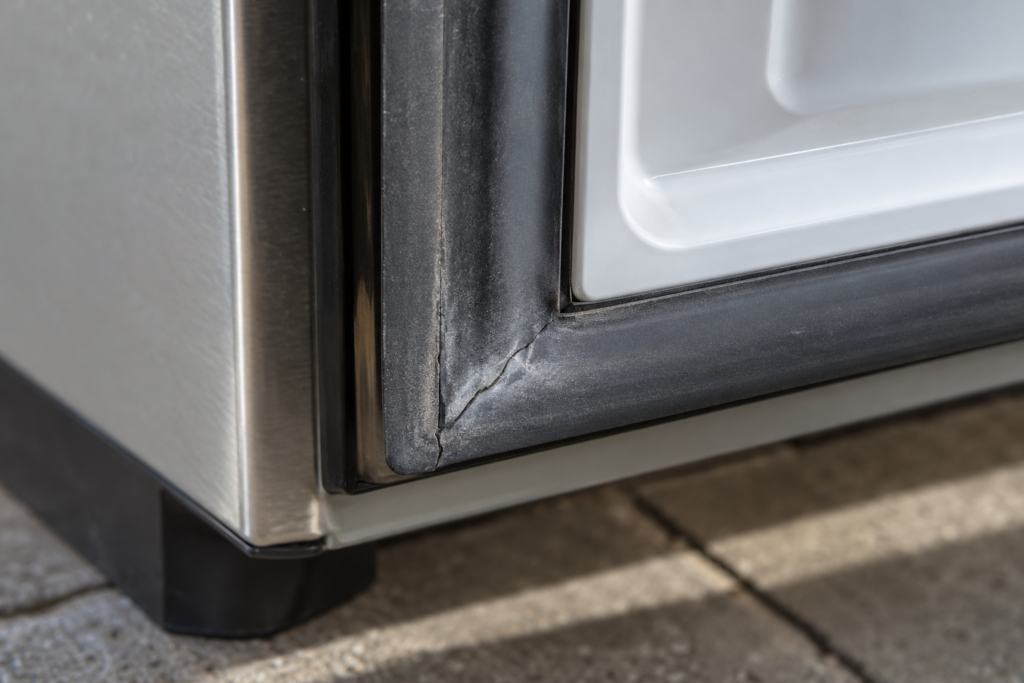
- A stiff, brittle or cracked gasket has been UV-degraded and will not reseal, so replace it.
- A slightly deformed but soft section can be reshaped with a hair dryer on low heat.
- A sagging hinge or warped frame will not be cured by a new gasket.
The Bottom Line
Replace a gasket that is cracked, stiff or torn, because it is a small repair that protects the food and the compressor. Check the hinge first if the seal looks healthy but still leaks.
A door seal is the cheapest part on an outdoor refrigerator and one of the first to wear out, and that mismatch is why owners hesitate. Is it worth replacing a gasket on a premium unit, or is the cold air already leaking because something bigger is wrong? The DOOR-SEAL page on this site calls a failed gasket one of the most common maintenance issues on DCS outdoor refrigerators, because outdoor conditions are harsher on rubber and vinyl than a kitchen ever is. This guide helps you decide, using a test you can do in two minutes. For the question of the whole unit, see the parent guide, is a DCS outdoor refrigerator worth repairing.
| Condition of the seal | What it means | Worth replacing? |
|---|---|---|
| Stiff, brittle, cracked at the corners | UV and ozone damage, will not reseal | Yes |
| Soft but slightly deformed in one spot | Heat distortion, may recover | Try reshaping first |
| Torn or cut by cleaning | Physical damage | Yes |
| Seal looks fine but the door hangs low | Hinge sag, not the gasket | No, fix the door first |
What Does a Failing Door Seal Do to an Outdoor Refrigerator?
It lets warm, humid air in, and the unit compensates by running longer. The page lists four signs: a door that does not hold a dollar bill tightly, a visible gap or cracked section, condensation on the cabinet exterior near the door, and a compressor that runs more than it should.
The unit keeps cooling, but less efficiently. The page says to avoid storing perishables that need strict temperature control until the gasket is replaced, and to stop and act if the cabinet cannot be kept below 45°F. A seal problem is therefore a food safety question as much as an energy one, and that is a reason to deal with it rather than live with it.
How Do You Test Whether the Seal Is the Problem?
Close the door on a dollar bill and pull it out. The page describes doing this at the top, bottom, left and right, and at the four corners, which are the most common failure points on outdoor gaskets. If the bill slides out freely at any point, the seal is not pressing there.
- Test all four sides and corners — note which spots fail, because a single bad corner is a different decision from a full perimeter.
- Run a finger along the whole gasket — feel for cracks, stiff sections, torn areas and parts pulled out of the groove.
- Judge the feel — the page says a gasket that is stiff or brittle, rather than soft and pliable, has been UV-degraded and will not reseal even if pushed back in place.
- Check the folds for mold — mildew in the folds means moisture is sitting against the cabinet.
- Check how the door hangs — a door that sags at the handle side prevents even contact whatever the gasket's condition.
Why Outdoor Seals Wear Faster
The page names the causes, and understanding them tells you whether a new seal will last. Ultraviolet light and atmospheric ozone harden and crack rubber and vinyl year-round. Repeated swings between hot days and cold nights deform the gasket profile. Harsh cleaners, power washers and objects resting against the door can cut or distort it.
- Shade the unit — afternoon sun on the door is the fastest way to harden a new gasket, and the temperature monitoring notice recommends shade for the unit anyway.
- Clean gently — use mild soap and a soft cloth on the gasket, and keep power washers and harsh chemicals away from it.
- Keep objects off the door — anything resting against it distorts the seal over months.
That matters for the decision. A new gasket on a unit in full afternoon sun will degrade again, so the repair is worth more if you also change the habits above. Our outdoor refrigerator maintenance guide covers the routine that extends the seal's life.
Is a DCS Outdoor Refrigerator Door Seal Worth Replacing?
Yes, in nearly every case where the gasket itself is cracked, stiff or torn, because it is a small repair that protects food, saves running cost and prevents frost and moisture inside the cabinet. The page lists the typical repair from $150 and 30 to 60 minutes, and says the job is sometimes within an owner's reach. The final price is confirmed after on-site diagnosis, with a written estimate before work begins.
It is worth replacing when:
- The dollar bill slides out in several places — the seal is no longer doing its job.
- The gasket is brittle to the touch — it has aged out and will not recover.
- The compressor runs far more than before — the seal is costing you in energy and wear.
- Frost or condensation is building near the door — humid air is coming in through the gap.
Frost is the other consequence worth knowing about. The FROST page lists a compromised door gasket among the causes of ice on the evaporator or inside the cabinet, because humid air that gets in condenses and freezes. Ice then blocks airflow, and a seal repair that would have cost little becomes a bigger job. Replacing the gasket early is the cheapest way to avoid that chain.
It is not worth replacing as the first step when the gasket is soft and the distortion is minor. The page says a hair dryer on low heat can gently warm a deformed section so you can reshape it, then you close the door firmly and let it cool. High heat can deform or melt the gasket, so keep the dryer on low.
When the Seal Is Not the Real Problem
A new gasket will not cure a sagging hinge or a warped door frame. The page says to call a technician if the hinge visibly sags, if gasket replacement does not resolve the sealing problem, or if the door frame looks warped or bent. A seal that fails the dollar-bill test on only one side, while the gasket looks healthy, is a sign of that kind of misalignment.
Two other conditions can look like seal trouble. A unit that is warm even with a good seal may have a failing fan, which our outdoor refrigerator repair or replace guide covers. A unit that struggles on hot afternoons may be a placement issue, and the site's temperature monitoring notice suggests checking the interior with an independent thermometer.
When you are ready, our outdoor refrigerator repair service checks door gasket compression across the full perimeter and hinge alignment as part of a visit. Book a visit or send us the model number and which spots fail the dollar-bill test.