 Michael Torres
Key Takeaways
- GREASE-OVR means the grease filter is past due for cleaning, not a mechanical fault — but the hood keeps running.
- A saturated filter lets grease travel further into the duct, where it is much harder to clean than the filter itself.
- Clean the filter every four to six weeks normally, every two to three weeks if you fry or grill often.
- Never run the hood with the filter removed — it exists specifically to stop grease reaching the fan and duct.
- Visible grease residue inside the duct opening means it is time for a professional duct inspection.
The Bottom Line
GREASE-OVR is a fire-risk warning dressed up as a maintenance reminder — clean the filter the moment it appears, and inspect the duct if buildup has already spread.
A grease filter that has gone past its cleaning point is not a small thing to ignore: it stops trapping grease effectively, and that grease settles further along the duct where it is much harder to clean and far easier to ignite. This site's GREASE-OVR error page exists specifically to flag a grease filter that is overdue, before it becomes a fire hazard rather than just a maintenance reminder.
| Warning sign | What it usually means | Action |
|---|---|---|
| GREASE-OVR on the control panel | Filter has exceeded its cleaning interval | Remove and clean or replace the filter promptly |
| Visible grease film on the filter mesh | Filter is already past due, alert or not | Clean immediately, do not wait for the alert |
| Weak suction despite the fan running | Filter is clogged enough to restrict airflow | Clean the filter before checking the fan motor |
| Grease residue visible inside the duct opening | Buildup has already spread past the filter | Have the duct professionally inspected |
What Does the GREASE-OVR Error Mean?
GREASE-OVR means the grease filter has gone past the interval the range hood's control system expects it to be cleaned or replaced, and it is a maintenance alert rather than a mechanical failure. The hood keeps running when this alert appears, which is exactly the problem: it is easy to keep cooking and ignore the warning since nothing seems to be broken.
- The control panel alert itself is the most direct sign, but it relies on the hood tracking run time accurately.
- A visibly discoloured or sticky filter is overdue regardless of what the control panel says.
- A faint but persistent cooking-oil smell lingering after the hood has been run is a sign grease is not being trapped as it should.
A mesh or baffle filter's job is to trap airborne grease before it reaches the fan and the duct beyond it. Once the filter is saturated, it stops doing that job effectively, and grease that should have been caught travels further into the system instead.
How Real Is the DCS Range Hood Grease Filter Fire Risk?
Yes — grease is highly flammable, and a range hood duct with a coating of accumulated grease combined with the heat naturally present from cooking below is a well-documented cause of kitchen fires, which is precisely why commercial kitchens are required to clean their hood systems on strict schedules. A residential hood faces a smaller version of the same risk, and it grows every time the filter is allowed to go past due without being cleaned.
The risk compounds specifically because grease that gets past a saturated filter does not stay put — it travels into the duct, where it is out of sight and far more difficult to clean than the filter itself, which is designed to be removed and washed in minutes.
A preventive maintenance visit once or twice a year is worth booking specifically to inspect the duct itself, since a filter check alone cannot tell you what has already accumulated further along the system.
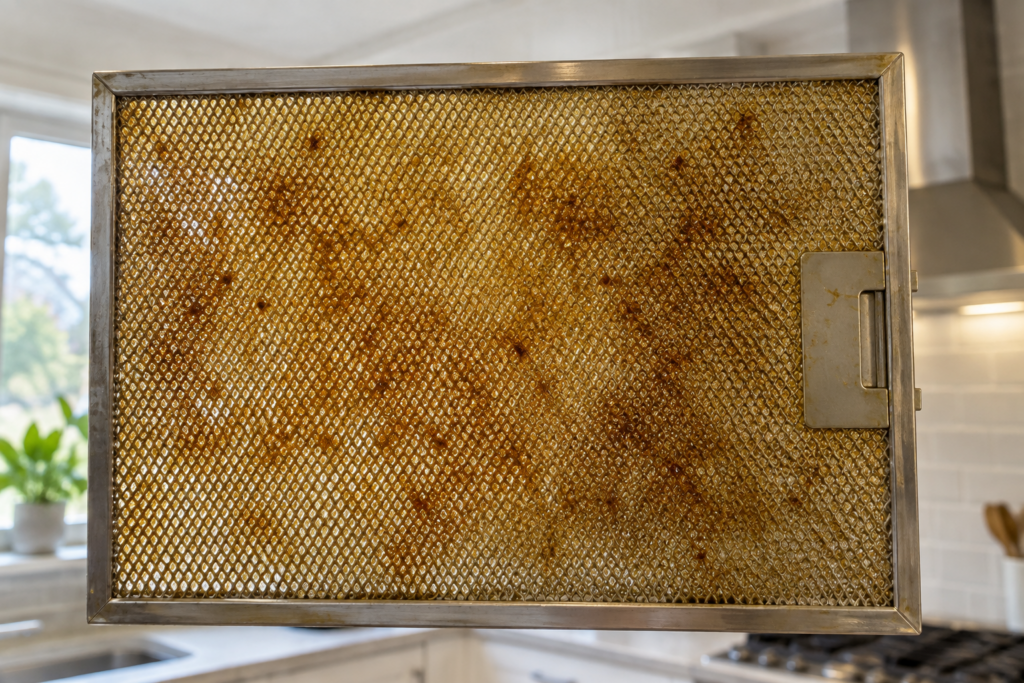
How Often Should You Clean a Range Hood Grease Filter?
Clean a range hood grease filter every four to six weeks under normal home cooking, and more often — every two to three weeks — in a household that fries or grills frequently, since oil-heavy cooking saturates the filter far faster than baking or boiling does. The GREASE-OVR alert is a backstop for owners who lose track of this, not a substitute for keeping the interval in mind yourself.
- Remove the filter and check it visually whenever you notice reduced suction, regardless of what the control panel says.
- Wash mesh filters in hot, soapy water or run them through a dishwasher cycle if the manual allows it.
- Never operate the hood with the filter removed "to improve airflow" — it exists specifically to stop grease reaching the fan and duct.
- Replace a filter that stays greasy after washing, since a saturated mesh will not fully clean with soap alone.
- Pair the filter check with the fan itself — our guide to a DCS range hood maintenance schedule covers both together.
None of this is specific to any one cooking style, though households that fry, grill indoors, or wok-cook regularly will reach the shorter cleaning interval sooner than households that mostly bake or boil, simply because more airborne grease is produced per hour of cooking.
What Should You Do the Moment GREASE-OVR Appears?
Remove and clean the filter as soon as the alert appears rather than clearing the alert and continuing to cook, since the underlying grease buildup does not go away on its own. If the filter has clearly been overdue for some time, or if you can see or smell grease residue inside the duct opening once the filter is out, that is the point to book a professional duct inspection rather than assuming a filter clean has fully addressed the risk.
- Turn the hood off and let it cool before removing the filter.
- Wash the filter thoroughly, checking that it comes fully clean rather than just less greasy.
- Inspect the visible duct opening for residue before reinstalling the filter.
- Book a duct inspection if buildup is visible beyond the filter itself.
When to Call for Service
Call for service when the duct itself shows grease buildup, when GREASE-OVR keeps returning faster than your normal cooking habits would explain, or when you simply want a professional inspection of a system you have not had checked in years. Our range hood repair service covers the filter, fan and duct system behind this alert, and a technician can confirm the duct is clear rather than just the filter. If the fan itself has already stopped rather than just being overdue for cleaning, our guide to a DCS range hood fan not working covers that separate fault. Schedule an inspection or tell us how long it has been since the last cleaning so we can assess the urgency correctly.
A duct inspection is a small cost compared with either a kitchen fire or the far more invasive cleaning a heavily neglected duct eventually needs, which is why this site treats GREASE-OVR as a safety alert worth acting on the same week it appears, not a chore to fit in whenever it becomes convenient.
Treat the alert the way you would a smoke detector chirp: a small, easy action now instead of a much larger one later. It costs a few minutes at the sink, not a service call, in the overwhelming majority of cases., and it is far cheaper in time and money than dealing with the consequences of ignoring it. Make it part of the same routine as checking the smoke detectors, and it will never become the fire-risk story instead of the maintenance footnote it should stay.